We have compiled the latest updates for Australian SAA certification in 2025. The table below summarizes the core new regulation points to help you quickly grasp the changes.
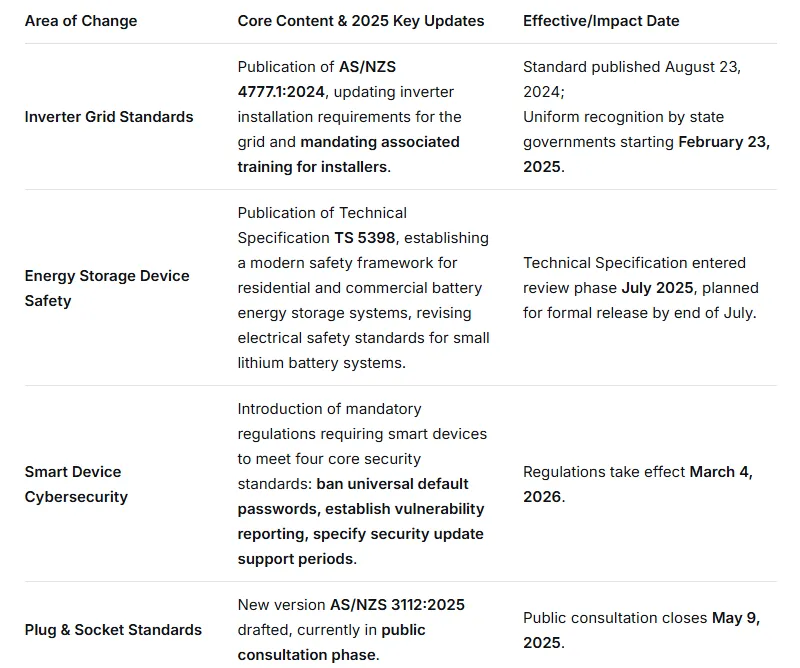
Focus on New Regulations: Inverters & Battery Storage
The energy sector is a key focus for regulatory updates this year, directly impacting the installation and certification of PV and energy storage products.
·AS/NZS 4777.1:2024 Inverter Grid Standard: This standard isn't brand new, but its associated mandatory training requirement is a key 2025 change. Solar Accreditation Australia has mandated that all accredited installers must complete minimum knowledge training on the new standard. This means manufacturers and importers need to ensure their partner installation teams have completed the required training (e.g., the free six-module course from the Smart Energy Council) to meet compliance requirements.
·TS 5398 Energy Storage Device Safety Technical Specification: This new technical specification aims to integrate emerging technologies and industry best practices, providing a more modern safety framework for Battery Energy Storage Systems (BESS). It revises electrical safety standards for small lithium battery storage systems and lays the foundation for the safety of residential and commercial battery storage equipment. The development of this specification indicates stricter and more specific safety certification requirements for related products in the future.
Focus on New Regulations: IoT Device Cybersecurity
Australia's Cybersecurity (Smart Device Security Standards) Rules 2025 set a globally leading mandatory security baseline for consumer-grade Internet of Things (IoT) devices.
The core requirements are clear and strict:
·Password Security: Universal default passwords are prohibited. Devices must force generation of a unique password or use biometric authentication upon first start-up.
·Vulnerability Management: A 24/7 vulnerability reporting channel must be established, with an emergency response initiated within 48 hours of receiving a report.
·Ongoing Protection: The product's security update support period must be clearly stated, and this period must be no less than 5 years after the product is no longer sold.
If your products involve smart homes, wearables, etc., you need to immediately start upgrading firmware security architecture and prepare for ACMA (Australian Communications and Media Authority) certification.
Note Other Key Standard Developments:
Besides the major updates above, other standards under revision are worth monitoring closely:
·AS/NZS 3112:2025 (Plugs and Sockets): This standard, affecting all appliance interfaces, is being updated. The draft is currently in public consultation until May 9, 2025.
·Low-Voltage Switchgear Standards: New draft versions of AS/NZS 61439.1 and AS/NZS 61439.2 have been released, with public consultation periods until May 14, 2025.
Certification Pathways & Recommendations Under New Regulations:
Facing these changes, an efficient compliance strategy is more important than ever. Here are certification pathways and practical advice based on the new regulations:
1.Certification Pathway Choice:
Full Australian market access typically requires completing safety certification and registering the RCM mark.
·SAA Certificate of Suitability: This is the traditional "safety certification," proving product compliance with Australian safety standards.
·RCM Mark: This mark is the comprehensive indicator that a product meets safety (SAA), electromagnetic compatibility (EMC), and even radio requirements. It is the final pass for legal product sale in the market.
2.Utilize CB Report Conversion:
If your product already has a CB Test Report based on International Electrotechnical Commission (IEC) standards, you can apply for SAA certification through "conversion." This can typically save about 40% in cost and time and is the preferred path for rapid compliance.
3.Key Actions for New Regulations:
·Smart Device Manufacturers: Immediately initiate cybersecurity self-assessments, focusing on password policies, vulnerability management processes, and security update commitments to prepare for the 2026 enforcement.
·PV & Storage Manufacturers: Ensure your product design complies with AS/NZS 4777.1:2024 and TS 5398 requirements, and actively partner with installers who have completed compliant training.
·All Manufacturers: It is recommended to prioritize testing with laboratories accredited by NATA (National Association of Testing Authorities, Australia) to ensure report validity.
We hope this overview combining the latest 2025 Australian SAA certification new regulations provides clear guidance. If you have more detailed questions about certification for specific product categories (e.g., PV inverters, home batteries, or smart appliances), BLUEASIA: +86 13534225140, will provide you with professional certification consulting services!
Related News