DAB+ (Digital Audio Broadcasting Plus) certification is a mandatory market access requirement for digital audio broadcasting equipment entering international markets. Its core purpose is to ensure devices comply with target market technical regulations regarding RF performance, audio quality, electromagnetic compatibility (EMC), and safety. Below are the latest certification documentation requirements and validity period management guidelines as of November 2025.
1. Universal Core Documentation:
The following foundational documents are mandatory for certification across all regions. Ensure content completeness and compliance with the latest standards:
- Technical Documentation:
- Schematics and PCB Layout Diagrams (identifying key RF modules, e.g., DAB chip model NXP TEF7000);
- Bill of Materials (BOM) listing all components, with DAB-related modules separately noting suppliers;
- Product Specification Sheet (including hardware parameters, software version, and supported frequency bands, e.g., Band III or L-Band).
- Test-Related Documents:
- Laboratory Test Reports (covering RF performance, audio decoding, EMC, etc.);
- Prototype Information (typically requires 2-3 finished units with specified frequency band support).
- Compliance Declarations & Application Documents:
- Declaration of Conformity (DoC) stating product compliance with target market regulations (e.g., EU RED Directive, Saudi SASO 2938);
- Certification Application Form (includes manufacturer details, product model, and functional description).
2. Regional Specific Requirements:
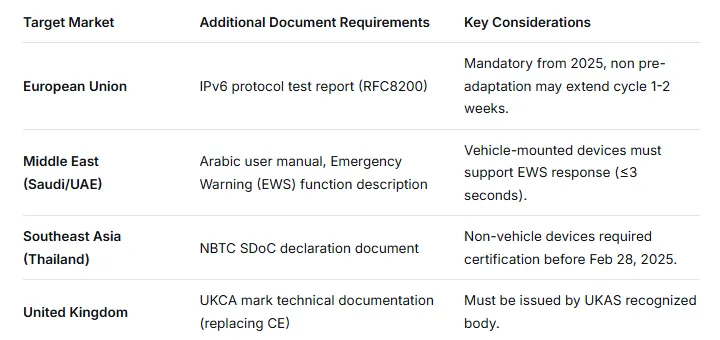
3. Common rejection reasons and countermeasures:
- Missing languages: User manuals lack local languages (e.g., Arabic for Middle East, German/French for EU);
- Incomplete feature descriptions: Failure to explicitly state DAB+ functionality support or frequency band coverage;
- Outdated testing standards: Use of legacy ETSI EN 300 401 (must comply with V2.1.1 by 2025).
II. DAB+ Certificate Validity & Maintenance Requirements
1. Regional Validity Differences:
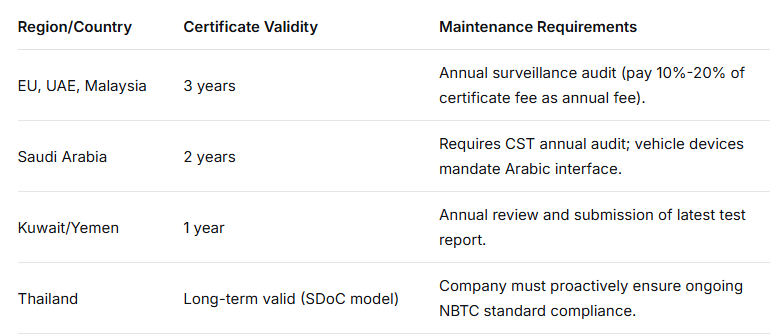
2. Conditions triggering validity expiration:
- Product design changes: Hardware modifications (e.g., replacing antennas or decoding chips) require recertification, costing 30%-70% of initial fees;
- Regulatory updates: Additional testing required for new standards like EU's 2025 IPv6 protocol testing (RFC8200);
- Production process adjustments: Changes to manufacturing processes or quality management systems may trigger re-evaluation.
3. Maintenance recommendations:
- Monitor evolving standards: Track technical updates from organizations like ETSI and WorldDAB;
- Initiate re-evaluation early: Prepare for retesting 6 months before certificate expiration to avoid market access disruption;
- Modular certification: Independently maintain certified components (e.g., decoding modules) to reduce overall re-evaluation costs.
III. Impact and Response to 2025 Regulations:
1. EU Mandatory IPv6 Testing:
- Effective date: January 2025;
- Requirement: Devices must support RFC8200 protocol; non-pre-adapted devices will face extended certification cycles;
- Response: Reserve IPv6-compatible interfaces during design phase.
2. Mandatory Certification for Thai In-Vehicle Devices:
- Effective Date: October 31, 2025;
- Scope: New in-vehicle devices require NBTC certification; non-in-vehicle devices effective as of February 28, 2025.
3. Middle East Emergency Broadcast System Upgrade:
- Requirement: In-vehicle devices must support EWS (response time ≤ 3 seconds) and provide Arabic operating instructions;
- Response: Select EWS-compatible chipsets (e.g., NXP TEF700x).
DAB+ certification documentation preparation and validity management are critical for global product compliance. Enterprises must proactively plan (e.g., embed IPv6, multi-language interfaces), precisely adapt to regional regulations (e.g., EU RED, Saudi SASO), and establish dynamic maintenance mechanisms to address standard upgrades. With heightened global requirements for in-vehicle devices and cybersecurity in 2025, systematic compliance strategies will become core market access competitiveness.
This information is current as of November 2025, based on the latest developments from ETSI, WorldDAB, and the EU Official Journal. For specific implementation, refer to guidance from authorized laboratories (e.g., Blue Asia Testing: +86 13534225140).
Related News

