This article outlines key new regulations for KC Mandatory Certification effective by the end of 2025, covering laws, standards, product scope, and market surveillance.
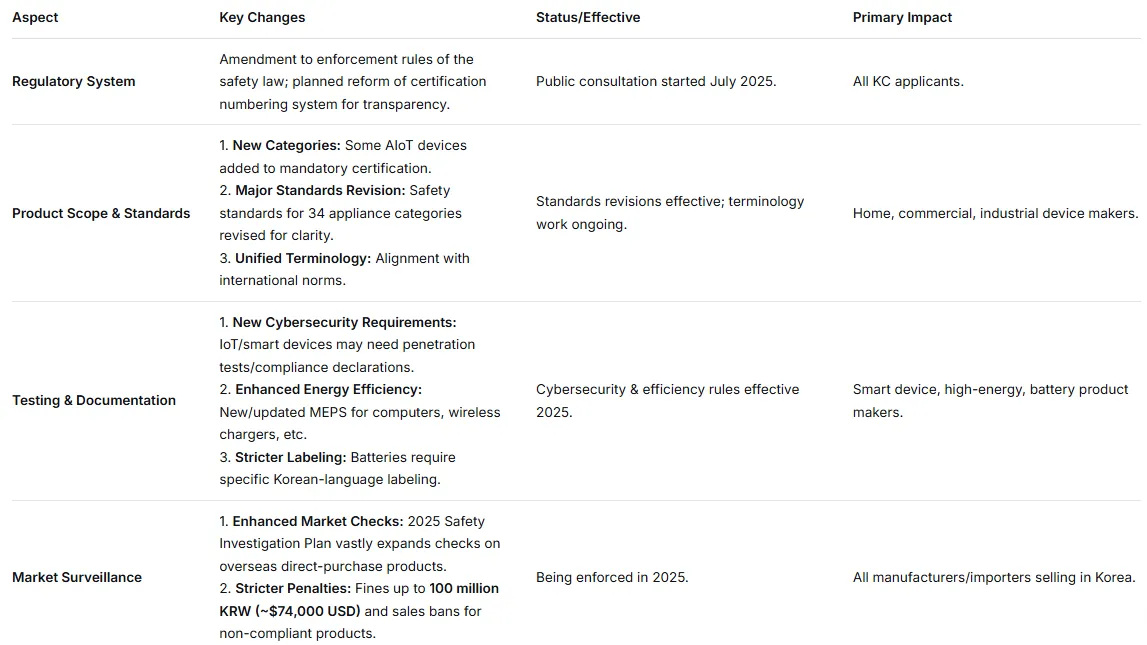
Detailed Analysis of KC Regulation Changes:
1.Regulations & System: Systemic optimization is underway, including a planned overhaul of the certification numbering system for better transparency and international manufacturer access.
2.Products & Standards:
-Expanded Scope: Certain AIoT devices are now explicitly under mandatory certification.
-Standards Update: Major revision of 34 safety standards focuses on editorial and terminology clarity to reduce compliance risk from misinterpretation.
-International Alignment: Ongoing work to unify terminology (e.g., for lighting) with global standards.
3.Testing & Documentation:
-Mandatory Cybersecurity: A key 2025 change. IoT devices with connectivity may require additional cybersecurity documentation and/or penetration testing.
-Energy Efficiency Upgrades: Korea's e-standby program expanded in 2025. New products like computers/multifunction printers now fall under MEPS, requiring labels with sleep mode power and annual carbon emissions. Standards for wireless chargers and commercial displays are also stricter.
-Eco-Labeling: Battery products must meet RoHS and have specific Korean labeling requirements.
4.Market Surveillance:
-Broader Investigations: The 2025 plan increases inspected product categories from ~450 to ~1000, targeting non-certified goods entering via online platforms.
-Severe Penalties: Violations like missing KC marks or local agent info can lead to maximum fines and sales bans.
Related Important Update: USB-C Interface Rule
A separate but related technical regulation: Starting November 6, 2026, 13 categories of mobile/smart devices (phones, tablets, laptops, keyboards, mice) sold in Korea must be equipped with a USB Type-C interface compliant with SDoC requirements. Plan product designs accordingly.
The 2025 KC changes reflect Korea's tightening focus on cybersecurity, energy efficiency, and market enforcement. Companies must integrate these requirements from the design phase and establish dynamic compliance management. Contact BLUEASIA: +86 13534225140.
相关新闻